
The Night the Systems Didn’t Show Up
The call came late.
A staff member had answered their door to a teenager asking for someone specific. When told that person wasn’t there, he said he had a gun—and that he was going to start shooting people if the staff member didn’t show up.
The person he was looking for was his former teacher, from when he had attended school here.
That’s when I called 911.
He was drunk. He was agitated. And he was moving through staff housing making threats. This wasn’t something to downplay or wait out.
What followed wasn’t a lack of concern—it was a lack of clarity. County, state, and Navajo authorities argued over jurisdiction while the situation continued to unfold.
Meanwhile, the kid was still there.
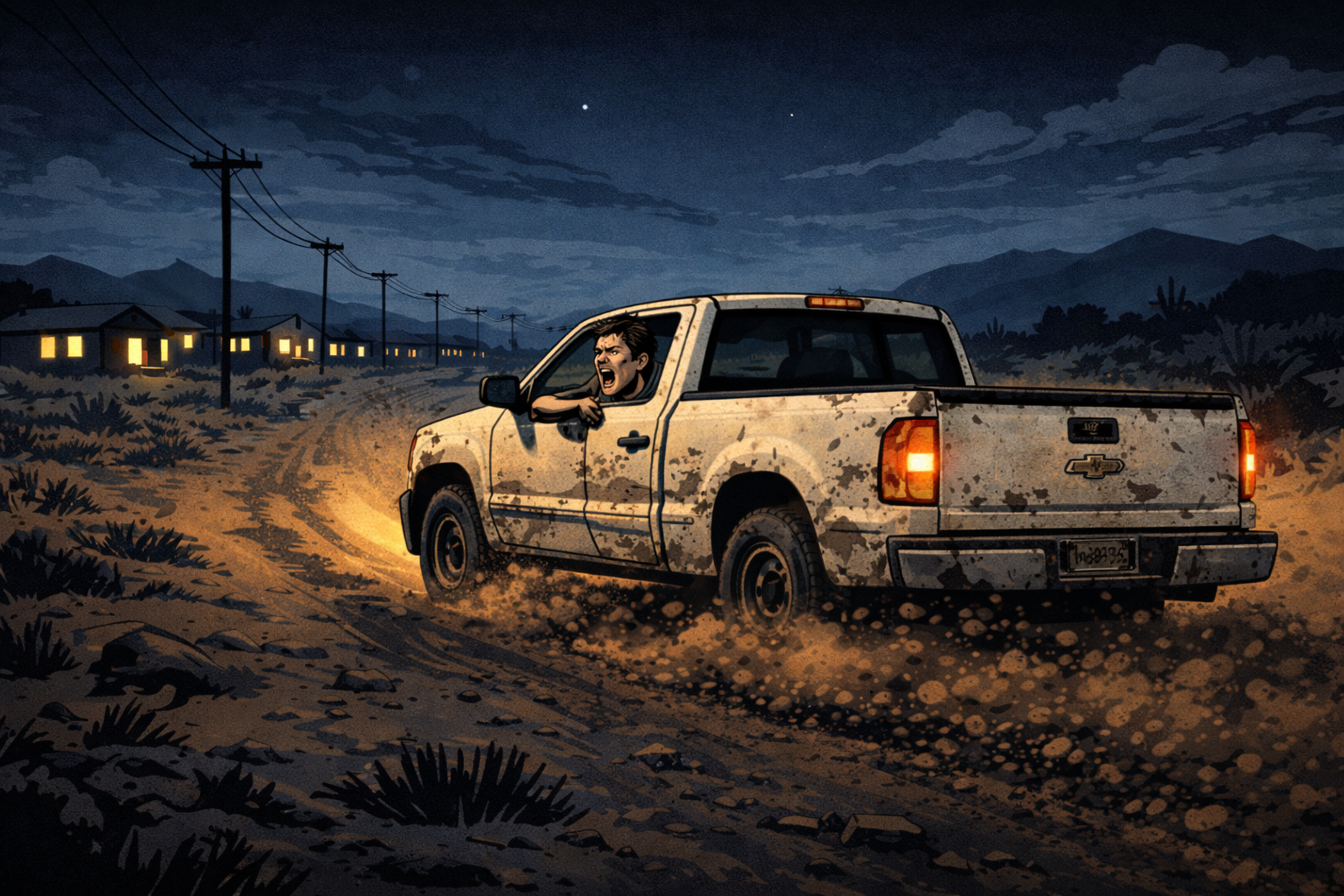
Earlier that day, a staff member had seen a truck speeding dangerously down the main road. A girl was hanging halfway out, clearly trying to get away.
They recorded it and sent me the video.
At the time, it was alarming. By that night, it became clear it was connected.
As the evening wore on, he began driving around campus erratically—yelling, swerving, circling back through dark areas near staff housing. Alcohol, anger, and a moving vehicle don’t leave much margin for error.
That’s when I went out on foot.
Before I did, I retrieved a firearm—an AR—from my safe. I didn’t load it. I didn’t want to use it. But threats had already been made, and I didn’t yet know whether he was actually armed.
Twenty-two years of Army service teaches you some hard lessons. One of them is knowing when preparedness matters—and another is knowing when restraint matters more.
I caught up to him while he was outside his truck. The engine was still running.
Once it became clear he was unarmed, I set the firearm down—intentionally—to defuse the situation.
That’s when we fought for the keys.
It was physical. Close. Chaotic.
I was trying to pull the keys from the ignition and keep him from getting back behind the wheel. He was drunk, angry, and not thinking clearly. The truck was still running, and the danger wasn’t theoretical anymore.
Eventually, I got the keys.
He took off on foot.
Back into the dark.
Back toward staff housing.
Back to pounding on doors again.
When I caught up to him later, I approached him unarmed.
That was when things finally slowed down.
He wasn’t posturing anymore.
He wasn’t threatening anyone.
He was hurt—some from the earlier struggle, and some from an earlier fight with his girlfriend that had left his face scratched and swollen. He was exhausted, drunk, and unraveling.
I didn’t lecture him.
I didn’t threaten him.
I didn’t escalate.
We talked.
The shouting faded. The tension eased. Eventually, I invited him to the office—somewhere lit, warm, and calm.
Coffee.
Food.
A place to sit.
That’s where the night finally broke open.
He cried—not dramatically, but deeply. The kind that comes when adrenaline burns off and there’s nothing left holding the hurt together.
That’s when the rest of the story surfaced.
The speeding truck earlier that day—the video—had been him and his girlfriend. The relationship had collapsed. There had been a fight. Alcohol had done the rest.
That night wasn’t really about violence.
It was about loss.
I gave him a ride home and kept his keys. I told him I wouldn’t let him drive, but we’d figure out the truck in the morning.
He agreed.
After I got him home, I returned to the mission.
Only then—five hours after the initial 911 call—did law enforcement finally arrive.
By that point, the crisis was already over.
The next morning, he walked back.
Ten miles.
Sober. Apologetic. Ashamed.
I gave him his keys back.
This isn’t a story about heroics.
It’s a story about what happens when broken systems collide with broken people—and someone has to stand in the gap long enough for things not to get worse.
Scripture says, “Blessed are the peacemakers” (Matthew 5:9). Not the loudest voices. Not the strongest force. The ones who know when to set things down so the night doesn’t get any darker.
That night could have ended very differently.
It didn’t—not because everything went right, but because restraint mattered.
Sometimes ministry doesn’t look like preaching or programs.
Sometimes it looks like walking dark ground, setting things aside, holding car keys, and sitting with a young man while he cries over a cup of coffee.
No headlines.
No clean resolution.
Just one less tragedy.
And for that night, that was enough

Leave a Reply